program
07 OCTOBER:
| 08:30 - 08:50 |
Arrival and Welcome Briefing Location: University of Botswana (UB Sports Indoor) |
| 08:50 - 09:00 | Transfer to Motho Le Motho Kgomo Monument |
| 09:00 - 09:20 |
Botswana's National Philosophy & Social Values Location: Motho Le Motho Kgomo Monument |
| 09:20 - 09:50 |
Transfer to Gaborone City Council |
| 09:50 - 10:30 |
Local Governance & Citizen Participation Location: Gaborone City Council (Confirmation pending) |
| 10:30 - 10:40 |
Transfer to Ntlo ya Dikgosi |
| 10:40 - 11:30 |
Traditional Leadership & Consultative Democracy Location: Ntlo ya Dikgosi (House of Chiefs) (Confirmation pending) |
Registration for the pre-tour is mandatory and subject to a fee – all relevant information can be found here.
| 11:30 - 11:45 |
Transfer to the Parliament of Botswana |
| 11:45 - 12:30 |
Botswana's Parliamentary Democracy Location: Parlament of Botswana (Confirmation pending) |
| 12:30 - 13:15 |
Transfer to Bahurutshe Cultural Village |
| 13:15 - 13:45 |
Traditional Welcome Ceremony & Guided Cultural Experience Location: Bahurutshe Cultural Village |
| 13:45 - 14:25 |
Indigenous Governance Systems, Community Participation & Cultural Heritage Location: Bahurutshe Cultural Village |
| 14:25 - 15:25 |
Traditional Food, Music & Cultural Performances Location: Bahurutshe Cultural Village |
| 15:25 - 16:10 |
Return to Gaborone |
08 October:
Ort: UB-Konferenzzentrum, 8WMP+2PJ, Jawara, Gaborone, Botswana
| 08:30 - 09:00 |
Democracy Fitness — Morning Warm-Up Workshop |
Democracy Fitness treats democratic participation as a set of everyday skills that can be developed and strengthened. Through short, structured exercises, participants practise constructive disagreement, active listening, empathy and courage to engage more effectively in everyday democratic interactions. |
| 09:00 - 09:30 | Welcome Addresses Location: Plenary Hall |
|
| 09:15 - 09:30 | Opening message by Former President His Excellency Mogweetsi Eric Keabetswe Masisi, Botswana Location: Plenary Hall |
|
| 09:30 - 09:45 | Keynote by Ann-Christine Vossberg-Straw, Co-President of the Swiss Democracy Foundation Location: Plenary Hall |
|
| 09:45 - 10:45 |
Panel: Global State of Direct Democracy Location: Plenary Hall Moderator: Clara Egger, Erasmus University Rotterdam, the Netherlands |
What is changing in direct democracy around the world – and what is happening closest to citizens? Drawing on the latest edition of The Global State of Direct Democracy, this panel explores recent developments worldwide, with a particular focus on local direct democracy. Panellists bring perspectives from different geographical and institutional contexts to uncover emerging practices, persistent obstacles and lessons that can travel across borders. |
| 10:45 - 11:20 | Coffee Break & Networking | |
| 10:55 - 11:15 |
Democracy Yoga Democracy needs flexibility – and so do we. This participatory yoga session offers a moment to move, breathe and reset amid a packed Global Forum programme, while playfully reflecting on balance, connection and resilience. No previous yoga experience required – just come as you are. |
From Local Voices to Global Decisions: Lessons from EU for Global Location: Market of Ideas How can citizens have a meaningful say in decisions that reach beyond national borders? The EU for Global project explored transnational citizen participation by bringing together citizens and residents across eight EU countries to discuss the European Union’s role in the world, with particular attention to voices often underrepresented in political decision-making. Through local participatory events and a transnational online consultation, participants exchanged perspectives on global challenges and developed concrete recommendations for European decision-makers. The project offers practical lessons on connecting local participation with transnational policymaking, creating inclusive spaces for deliberation, and translating diverse citizens’ perspectives into recommendations for decision-makers. |
| 11:20 - 12:30 |
Panel: Political Institutions in Botswana
|
What makes Botswana’s political institutions resilient, and where do they face pressure? This panel examines the role and strength of the country’s political institutions, with particular attention to traditional institutions and how they interact with contemporary democratic governance. Bringing together research and policy perspectives, the discussion explores what these dynamics mean for the quality and evolution of democracy in Botswana. |
| 12:30 - 14:00 | Lunch Break | |
| 12:55 - 13:15 | Showcase: Speaking and Listening: Effective Communication in Democratic Practice Location: Market of Opportunities Speaker: Katrin Tober, Mehr Demokratie, Germany |
Showcase exploring effective speaking and listening as practical skills for democratic participation. |
| 13:20 - 13:40 |
Showcase: International Initiative for Peace (IIP): Evidence Clinic Speaker: Adejare Somorin |
What changes when citizen deliberation becomes part of how local institutions actually work? Drawing on evidence from local government peace desks and social cohesion work in Nigeria, this hands-on showcase demonstrates how grassroots deliberation can widen participation, improve local decision-making and build trust. Participants will apply the approach to a local institution of their own, identifying one practical change that could make participation more inclusive and effective. |
| Afternoon: parallel sessions | > separate registration will be mandatory for site visits | |
| 14:00 - 16:00 |
The World Style of Debate: Active Civic Engagement and African-Centred Democratic Practice |
This workshop uses and teaches the World Style of Debate to foster inclusive civic engagement and active participation in discussions on governance, accountability and development. It connects modern deliberative debate with African indigenous democratic practices such as the Kgotla, creating a space for collective dialogue, critical policy examination and collaborative decision-making. |
| 14:00 - 17:00 | Kgotla in the spotlight: Tlokweng Main Kgotla Location: Tlokweng Main Kgotla Host: Puso Gaborone (Kgosi) |
Q&A and plenary discussion with the Chief and Headmen. Observation of a live Kgotla session is subject to feasibility. |
| 14:00 - 17:00 | Kgotla in the spotlight: Muchidi Kgotla Location: Muchidi Kgotla |
Kgotla in the spotlight: Muchidi Kgotla Location: Muchidi Kgotla |
| 14:00 - 17:00 | Kgotla in the spotlight: Feminist Kgotla Location: University of Botswana campus Host: Tlamelo Mothudi, activist |
Q&A and discussion exploring feminist democratic governance practice. |
| 14:00 - 17:00 | Kgotla in the spotlight: Kgotla ya Basha — Youth Kgotla Location: University of Botswana campus Host: Active and Human, Botswana |
Q&A and discussion exploring youth participation in the Kgotla system. |
09 October:
Ort: UB-Konferenzzentrum, 8WMP+2PJ, Jawara, Gaborone, Botswana
| 08:0 - 08:30 |
Democracy Fitness — Morning Warm-Up Workshop |
Democracy Fitness treats democratic participation as a set of everyday skills that can be developed and strengthened. Through short, structured exercises, participants practise constructive disagreement, active listening, empathy and courage to engage more effectively in everyday democratic interactions. |
| 08:30 - 09:15 | Keynote: Children at the Heart of Democracy: Strengthening Participation from an Early Age Location: Plenary Hall Speaker: Salvör Nordal, Ombudsman for Children, Iceland |
How can children be given a meaningful voice in the decisions that shape their lives? Drawing on Iceland’s experience with the Children’s Forum, Youth Councils, young advisory groups and School Councils, this keynote examines the strengths and limitations of different ways to bring children into democratic processes. It explores what it takes to build inclusive platforms that enable diverse groups of children to participate on their own terms and have their perspectives taken seriously. |
| 09:15 - 10:00 | Panel: Linking Citizens’ Input to Parliamentary Work Location: Plenary Hall Moderator: Bruno Kaufmann, Swiss Democracy Foundation, Switzerland Speakers: Hon. Dithapelo Keorapetse, Speaker of the National Assembly, Botswana; Dumelang Saleshando, Leader of the Opposition, Botswana; Daniela Vancic, Democracy International, Germany/USA; Jung-Ok Lee, Former Minister of Gender Equality and Family, South Korea |
How can citizens have a meaningful say in parliamentary work beyond the ballot box? Bringing together parliamentary, political and civil society perspectives from Botswana and beyond, this panel explores how participatory democracy can connect citizens more closely with democratic institutions and policymaking. The discussion will examine what it takes to turn public input into meaningful influence while strengthening engagement and trust. |
| 10:00 - 10:45 |
Panel: Elections Speakers: Batlang Seabo, University of Botswana, Botswana; Jeremy Seekings, University of Cape Town, South Africa; Sonia Galebolae, Botswana Center for Public Integrity; Ishamael Theletsane, Southern African Development Community, South Africa |
This panel examines the role of credible, well-administered elections in sustaining public trust and democratic resilience across the region. Drawing on Botswana’s electoral experience alongside comparative cases from SADC and beyond, panellists discuss election management, voter participation and safeguards against democratic erosion. The session connects these experiences to the Forum’s focus on strengthening institutions and regional democratic cooperation. |
| 10:45 - 11:15 | Coffee Break & Networking | |
| 10:55 - 11:15 | Democracy Yoga Location: To be confirmed Speaker: Elisabeth Erlandsson Kaufmann, Sweden |
Democracy needs flexibility – and so do we. This participatory yoga session offers a moment to move, breathe and reset amid a packed Global Forum programme, while playfully reflecting on balance, connection and resilience. No previous yoga experience required – just come as you are. |
| 11:15 - 11:30 | Keynote: Referendum Integrity Globally - with a focus on Africa Location: Plenary Hall Speaker: Norbert Kersting, University of Münster, Germany |
What makes a referendum fair – and what happens when the process is open to manipulation or misuse? Drawing on the global Direct Democracy Integrity Index, this keynote explores how referendum integrity can be measured across countries and where both risks and good practices are emerging. It will also examine how direct and deliberative democracy can work together to strengthen the quality and legitimacy of democratic decision-making. |
| 11:30 - 12:15 | Panel: Citizens and Natural Resources: Shared Governance Across the Resource Exploitation Chain Location: Plenary Hall Moderator: Dr Bashi Mothusi, University of Botswana, Botswana Speakers: Gram Matenga, International IDEA; Emmanuel Mogende, University of Botswana, Botswana; Dorcas Norupiri, Zimbabwe Diamond and Allied Minerals Workers Union, Zimbabwe; Marcella Nery, Delibera Brasil, Brazil |
Who gets a say in how natural resources are managed, from extraction to the benefits they generate? Through practical case studies from different regions, this panel explores how citizens, workers, communities and other stakeholders can participate more meaningfully across the resource exploitation chain. The discussion will examine approaches to building stakeholder capacity, strengthening inclusive governance and creating a community of practice around natural resource management. |
| 12:15 - 13:00 | Panel: Networks for Democracy - Building Resilience Across Borders Location: Plenary Hall Moderator: Caroline Vernaillen, Democracy International, Belgium Speakers: Giovanni Allegretti, Centre for Social Studies at Coimbra University, Portugal; Greta Rios, People Powered, Mexico; Charlie Martial, Afroleadership, Cameroon; Andreas Müller, Democracy International, Germany; Thilo Schöne, Friedrich-Ebert Stiftung, Botswana |
How can networks and communities of practice strengthen democracy in the face of democratic backsliding? Drawing on insights from the Nets4Dem project, this session explores how networks working on participation and deliberation are adapting their practices, structures and relationships to build democratic resilience. Moving beyond a Eurocentric perspective, the discussion will ask what stronger South–North collaboration can bring to this work and what networks across regions can learn from one another. |
| 13:00 - 14:00 | Lunch Break |
|
| 13:10 - 13:30 | Interactive Case Study: Consul Democracy Platform Location: Market of Opportunities Speaker: Simon Strohmenger, Consul Foundation, Germany |
Can digital tools strengthen rather than replace democratic participation? This session explores how Nairobi County is combining its new Consul Democracy platform with established community engagement practices to create more inclusive, transparent and accessible decision-making. The session shares practical lessons on implementation, institutional coordination and building trust in digital participation. |
| 13:35 - 13:55 | Showcase: Youth Participation in Community Development Location: Market of Opportunities Speaker: Kelo Kubu, CorpsAfrica South Africa, South Africa |
What happens when communities themselves decide which problems to tackle and how to solve them? Drawing on CorpsAfrica South Africa’s community-led development work, this showcase demonstrates how tools such as Asset-Based Community Development, Human-Centred Design and the Innovator’s Compass can enable dialogue, collective decision-making and shared ownership. It explores how methods usually associated with community development can become practical tools for participatory democracy. |
| Block 1 |
PARALLEL SESSIONS
|
|
| 14:00 - 15:00 |
Fishbowl discussion: Ubuntu People’s Parliament What would democratic institutions look like if they were built around participation, dialogue and the principle of ubuntu – “I am because we are”? The Ubuntu People’s Parliament explores a model of community co-governance in which citizens move beyond periodic voting to take a more direct role in deliberation, accountability and local policymaking. This session examines how African democratic traditions and contemporary participatory practices can come together to rethink how democratic power is shared. |
Workshop: Strengthening Youth Participation and Intergenerational Collaboration for Modern Direct Democratic Renewal |
|
Workshop: Life as an Activist: Climate Action and Participation Around the World |
Workshop: Participatory workshop: Advocating for Democracy in Uncertain Times This open, participatory workshop widens the lens from direct democracy specifically to democracy promotion more broadly. In a moment when democratic institutions face mounting pressure worldwide, participants — practitioners, advocates, researchers, and citizens alike — will work together to identify concrete strategies for defending and advancing democratic practice, whether through direct democracy tools, institutional reform, or civic mobilization. The session will surface shared challenges (institutional resistance, resourcing, shrinking civic space, public disengagement) and shared opportunities across contexts, aiming to produce practical takeaways participants can bring back to their own work. |
|
| 15:00 - 15:30 | Coffee Break | |
| 15:00 - 15:30 | Showcase: A Live Two-Round Negative Vote Simulation Location: Market of Opportunities Speaker: Sam Chang, Balanced Ballot Alliance, Taiwan |
This showcase introduces the concept of negative voting and considers how it could strengthen democratic legitimacy and increase participation. |
| Block 2 | PARALLEL SESSIONS | |
| 15:30 - 16:30 |
Panel: Are Mandatory Referendums a Democratic Improvement? Exploring Types and Classifications of Mandatory Referendums with the Navigator to Direct Democracy When does requiring a referendum strengthen democracy – and when does it simply add a vote without improving democratic quality? Drawing on cases documented in the Navigator to Direct Democracy, this panel explores the different forms mandatory referendums can take. The discussion will examine the conditions under which they contribute to democratic development and where their limitations become apparent. |
15:30–16:30 Workshop: Natural Resource & Democratic Governance: The Democracy Lab An interactive Democracy Design Lab blending Kgotla-style consensus circles with a live European Citizens’ Initiative simulation. Mixed taskforces co-draft a water governance initiative, stress-test its legal viability and conclude with a symbolic signing ceremony, linking direct democracy practice to the 2026 UN Water Conference. |
|
Workshop: Uganda: Bridging Traditional Governance and Modern Direct Democracy What can modern democracies learn from Africa’s long-standing traditions of participatory governance? This session explores how indigenous practices of consensus-building, community assemblies and collective decision-making can inspire more inclusive, accountable and culturally rooted democratic institutions. Drawing on examples from East Africa, it highlights opportunities to connect traditional knowledge with contemporary democratic innovation. |
Storytelling workshop: Young Arabs Are Not the Future of Democracy — They Are the Present What can democratic cooperation look like when it grows from relationships between people rather than formal institutions? Drawing on experiences of youth activism across Tunisia, North Africa and the wider Arab world, this workshop invites participants to explore how cross-border networks can create spaces for democratic exchange, solidarity and action. Together, participants will consider what locally rooted regional cooperation requires and how connections between activists can be strengthened and sustained. |
|
| Block 3 | PARALLEL SESSIONS | |
| 16:30 - 17:30 |
Panel: Direct Democracy and Self-Determination: Can Citizens’ Referendums Help Resolve Stateless and Disputed Nations? Can direct democracy offer a peaceful way to navigate competing claims to self-determination, sovereignty and statehood? Drawing on experiences from Somaliland, the Khalistan referendum initiative and other contested contexts, this panel examines how referendums can be used when the political status of a people or territory remains unresolved. Panellists will explore their potential and limitations, including questions of participation, legitimacy, recognition and what happens after a vote. |
Workshop: Practical Design Template to Imagine Democratic Units Inside Real-Life Institutions Location: Workshop Room 1 Speakers: Ann-Christine Vossberg-Straw, Swiss Democracy Foundation, Switzerland; Delia Bazzigher, Swiss Democracy Foundation, Switzerland: Motlatsi Mogorosi, Active and Human, Botswana What can Botswana’s kgotla tradition teach us about bringing democracy closer to everyday life? In this hands-on workshop, participants will design small democratic units for settings such as schools, neighbourhoods, associations and local services, exploring how people can initiate issues, deliberate, influence decisions and see what happens next. Together, they will test how local democratic traditions can inspire forms of participation that are practical, repeatable and consequential. |
|
Workshop: What makes democracy resilient? Stress-testing the ecosystem of democracy. Location: Workshop Room 2 What makes democracy resilient in times of crisis? Through a practical, interactive exercise, participants will explore how different actors contribute to democratic resilience and how their roles work together as a system. Together, we will identify how resilience can be built before a crisis hits, enabling democracies to withstand disruption, adapt and recover. |
Workshop: Women, Environment and Youth Development Initiative Location: Workshop Room 3 A participatory workshop in which small groups exchange regional experiences on resource governance, climate, migration and citizen participation, then collaboratively map strategies to strengthen citizen influence in local and regional decision-making. |
|
| 17:30 - 17:45 | End-of-Day Wrap-Up & Announcements Location: Plenary Hall |
10. Oktober:
Ort: UB-Konferenzzentrum, 8WMP+2PJ, Jawara, Gaborone, Botswana
| 08:00 - 08:30 | Democracy Fitness — Morning Warm-Up Workshop Location: Market of Opportunities Speakers: Katrin Tober and Achim Wölfel, Mehr Demokratie, Germany |
Democracy Fitness treats democratic participation as a set of everyday skills that can be developed and strengthened. Through short, structured exercises, participants practise constructive disagreement, active listening, empathy and courage to engage more effectively in everyday democratic interactions. |
| 08:30 - 09:15 | Keynote: Memory, Hope and the Birth of a New Order Location: Plenary Hall Speaker: Namatai Kwekweza |
Namatai Kwekweza, 2025 German Africa Award laureate and founder of WELEAD Africa, presents her keynote lecture “MEMENTO: Memory, Hope and the Birth of a New Order” on global power shifts and youth-led leadership, followed by moderated dialogue. Presented by the International Youth Think Tank in partnership with WELEAD Africa and the German Africa Foundation. |
| 09:15 - 10:00 |
Panel: Citizen-Led Constitutional Reform |
Panel discussion on citizen-led constitutional reform and the role of participatory and direct democratic approaches in processes of institutional and constitutional change. |
| 10:00 - 10:45 | Panel: Perspectives for Direct Democracy in the African Union (AU) and the European Union (EU) Location: Plenary Hall Moderator: Raul Magni-Berton, Catholic University of Lille, France Speakers: Dr Kebapetse Lotshwao, University of Botswana, Botswana; Clara Egger, Erasmus University Rotterdam, France; Siyabulela Jentile, Civic Root Advocacy, South Africa |
Europe and Africa offer contrasting environments for democratic innovation. While democracy is deeply embedded in the EU’s institutional framework, many African countries are undergoing rapid political change, creating both opportunities and risks for participation. This session explores where direct and participatory democracy may develop and how the two continents can learn from each other’s experiences. |
| 10:45 - 11:15 |
Coffee Break & Networking |
|
| 11:15 - 12:00 | Panel: Last Chance for Global Governance Location: Plenary Hall Moderator: Josephine Schnee, Democracy International, Germany Speakers: Frank Lekaba, Democracy Without Borders, South Africa; Caroline Vernaillen, Democracy International, Belgium; Keneilwe Mapena, University of Botswana, Botswana; Gladys Mokhawa, University of Botswana, Botswana and former Permanent Representative of Botswana to the United Nations |
A moderated panel exploring UN-level citizen participation tools such as a World Citizens’ Initiative and Global Citizens’ Assemblies. Combining polling and open dialogue, the session considers their viability in the context of democratic backsliding and restrictions on civic space. |
| 12:00 - 12:45 | Closing Plenary: Key Takeaways & Resolutions | |
| 12:45 - 13:00 |
Announcements (Global Forum 2027 in India, Establishment of the Botswana Democracy Foundation) |
|
| 13:00 - 13:15 | Closing Remarks & Farewell |
thematic focus of the 2026 global forum on modern direct democracy
Where the kgotla meets the African Union – Indigenous, Resilient & Empowering
The 2026 Global Forum on Modern Direct Democracy will offer a rare opportunity to explore democratic innovation in (southern) Africa through the lens of Botswana's both traditional and innovative political landscape. The Forum will take place in Gaborone, the capital of Botswana. As Africa's oldest uninterrupted democracy and a hub of regional integration, the Forum will engage with key themes that blend traditional governance structures, contemporary democratic practices, and global challenges.
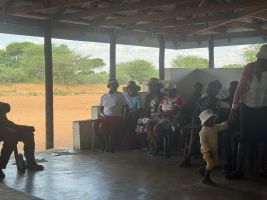
1. Enhancing democracy through local institutions
- The kgotla system: tradition meets democratic innovation
Botswana's kgotla system, an indigenous, participatory village assembly model, ...
Weiterlesen
2. Building strong institutions and making democracy more democratic
- Constitutional reform and grassroots policy-making
The ongoing consultation of citizens by the government through the kgotla on the ...
Weiterlesen- Youth and intergenerational democracy
With 60% of the population under 25, Africa is the world's youngest continent: the ...
Weiterlesen- People power for the planet
Climate change is not only an environmental crisis, it is also a democratic ...
Weiterlesen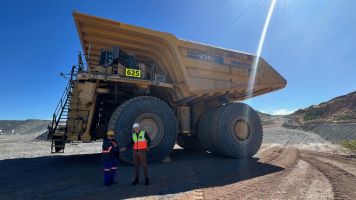
3. Democracy's never-ending challenges: Resources and regional Cooperation
- Natural resources, diamonds, and democratic governance
Natural resources play a central role in the economic and political life of ...
Weiterlesen- Regional integration and democratic cooperation
As host to the Souther African Development Community (SADC), Botswana plays an ...
WeiterlesenYou can read about the thematic focus we are aiming for in detail here. The Global Forum is not immune to the global funding pressures. In order to keep the conference free for those who want to attend, this year we'll have a simplified and streamlined programme that reduces the pressure on us as organisers. Unfortunately, this means we will select less sessions. The programme committee will give priority to those sessions that align fully with the thematic focus set out and of course our overarching question of direct and participatory democracy.
The final progam will be published here as soon as available.